Bitcoin Mining in 2027: Is It Profitable for Individuals?
Bitcoin Mining in 2027 can still be profitable for you if you secure low-cost power, choose an efficient ASIC, and keep equipment and operating costs within your revenue. Your operation earns a profit only when mining income covers its full costs, including electricity, fees, repairs, and hardware.
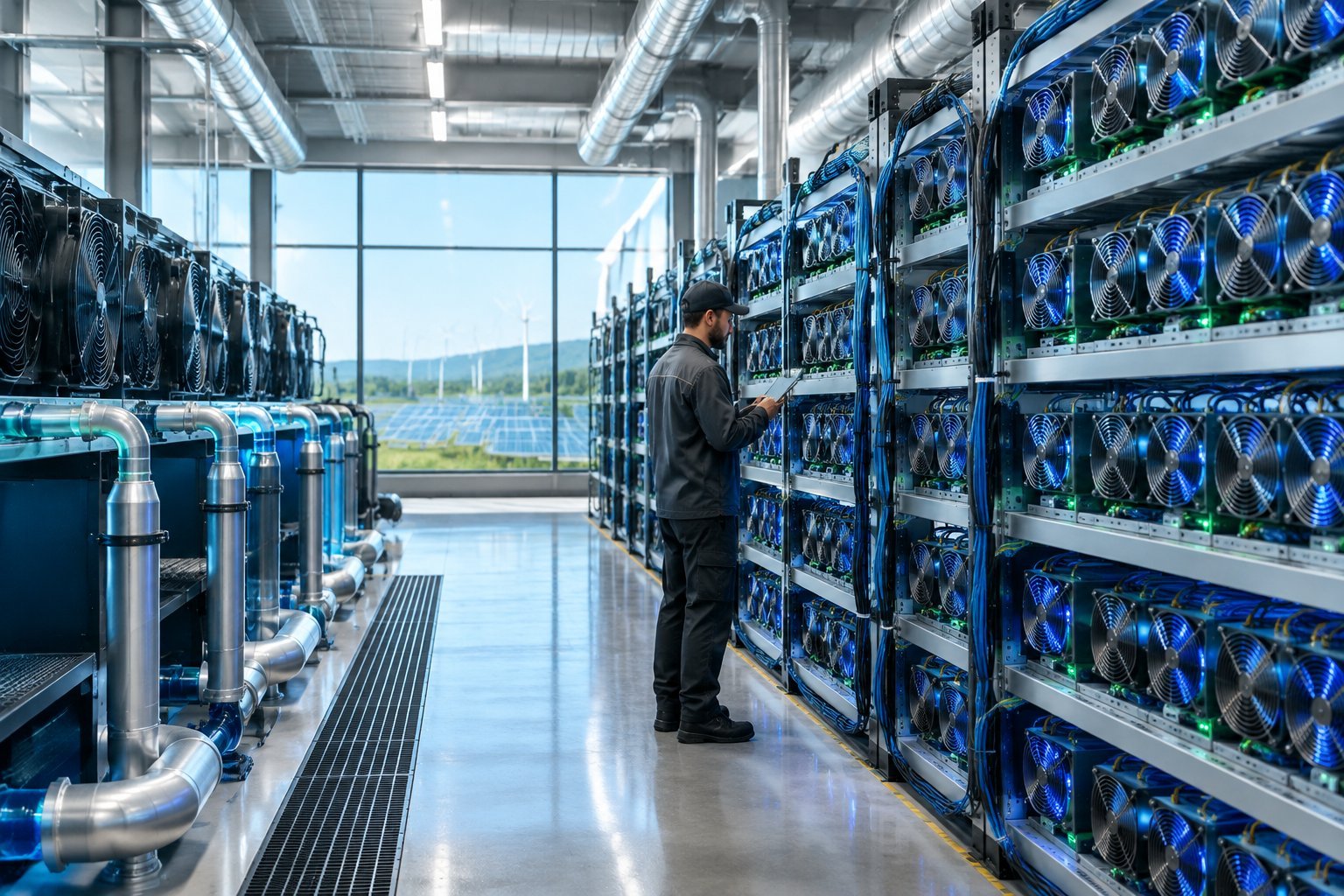
A rig’s expected earnings can change as Bitcoin’s price, network difficulty, and transaction fees shift. Before you buy equipment, calculate whether your power rate and expected uptime leave enough room to cover costs if revenue falls.
Can Individual Bitcoin Miners Still Earn a Profit?
Your mining operation can earn a profit when the value of the Bitcoin it earns exceeds its electricity, pool, maintenance, hosting, and equipment costs. For an individual, access to inexpensive power and efficient hardware will shape the result more than the headline price of a mining machine.
How Mining Revenue and Costs Interact
Mining revenue follows your share of the network’s computing power and the Bitcoin rewards distributed to miners. A pool combines members’ hashrate and pays out a share of rewards, which can make your income more regular than solo mining, though pool fees reduce what you keep.
Your operating costs accrue whether the Bitcoin price rises or falls. Electricity is a recurring expense, while equipment, repairs, cooling, internet access, and any hosting or financing charges affect your net return. Include these expenses in the same model so your estimate reflects cash flow and the cost of recovering your hardware investment.
A useful first calculation compares expected mining revenue with electricity and pool fees. A second, more complete calculation includes depreciation, repairs, and any upfront costs. The difference tells you whether a rig merely covers day-to-day operation or has a path to repaying your investment.
Why Profitability Varies by Miner
Two people running similar ASICs can get different results because they pay different electricity rates, have different cooling needs, and receive different terms from a host or power provider. Your location can also affect delivery charges and whether the power rate changes by time of day.
Network conditions shape your share of rewards. When more hashrate competes for Bitcoin rewards, your expected share falls unless your own equipment keeps pace. The effect of a halving also depends on Bitcoin’s price and network difficulty, so your projections should test more than one market scenario. Price and difficulty both influence how a halving affects miners.
What Determines a Mining Rig’s Break-Even Point?
Your break-even point is the revenue level at which mining income covers your chosen set of costs. An operating break-even calculation covers costs such as power and pool fees; a full break-even calculation also accounts for hardware and other upfront expenses.
Electricity Rates and ASIC Efficiency
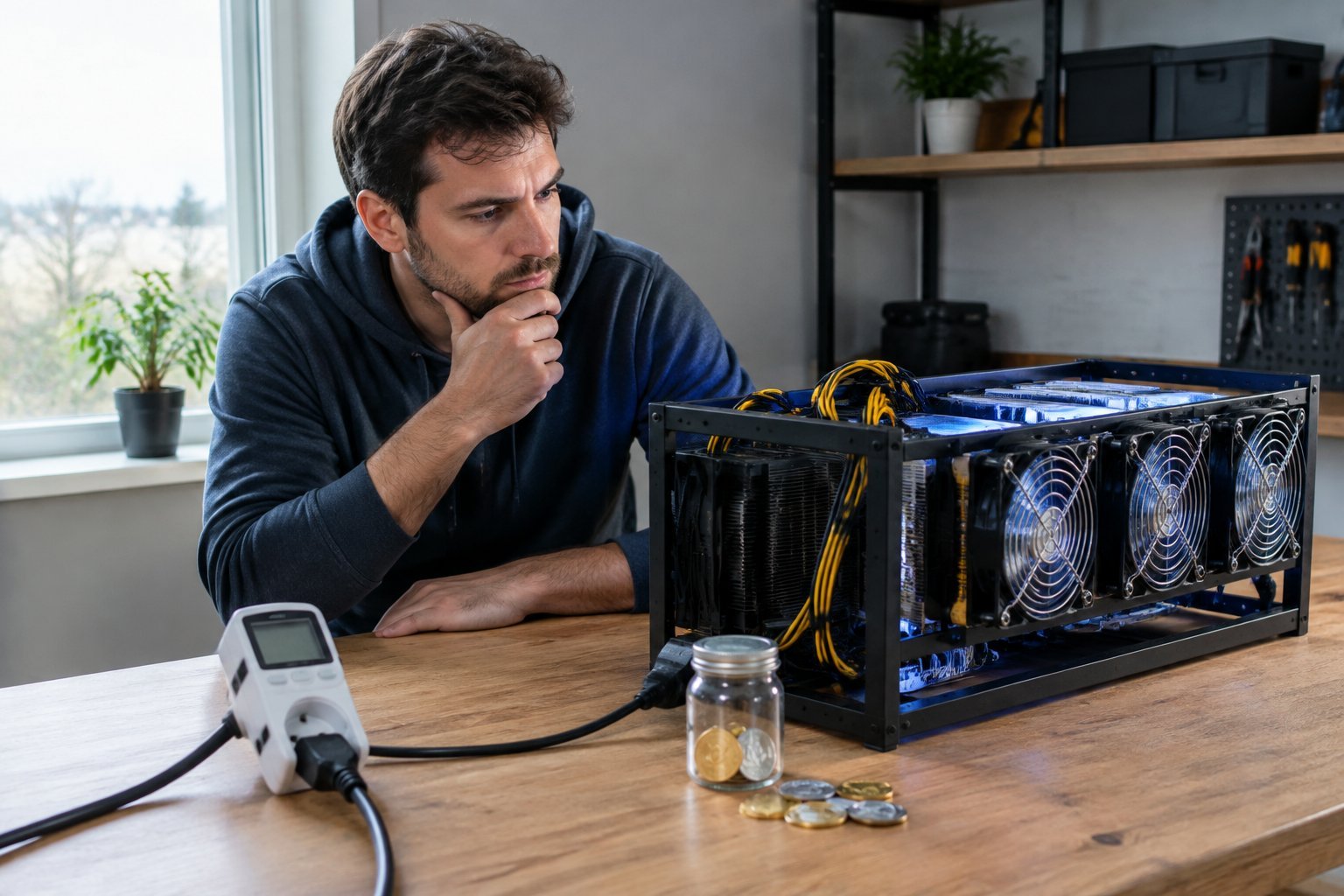
Your electricity bill depends on the rig’s power draw, how long it runs, and the rate you pay per kilowatt-hour. Check the complete bill for delivery charges, demand charges, and time-based pricing; a low advertised energy rate may not reflect your full cost.
ASIC efficiency, measured in joules per terahash, helps you compare how much electricity a machine uses for its computing power. A more efficient unit reduces the energy required for a given hashrate, which can improve your ability to withstand lower Bitcoin prices or higher network difficulty. Compare efficiency alongside purchase price, expected lifespan, and the conditions under which the machine can operate.
Cooling and ventilation add to your power needs. If your machine runs in a warm or poorly ventilated space, extra cooling or reduced uptime can change your estimate. Use the machine’s stated power draw as a starting point, then include the facility’s other electricity use.
Bitcoin Price, Network Difficulty, and Hashprice
Bitcoin’s price affects the dollar value of the rewards you earn. Network difficulty affects how much computing work competes for those rewards, while transaction fees add another variable to miners’ revenue.
Hashprice estimates mining revenue per unit of hashrate over a set period. You can compare your rig’s expected output against your electricity and operating costs to find the hashprice at which it breaks even. A breakeven hashprice calculation can also help you assess how much room your operation has if market conditions weaken.
Build a range of scenarios rather than relying on one price forecast. Include a lower-revenue case and account for the possibility that network difficulty rises. If your margins disappear under a modest change in either variable, the rig carries substantial operating risk.
Hardware, Cooling, and Hosting Expenses
Your hardware cost includes the purchase price, shipping, installation, and the time it takes to put the machine into service. Repairs and replacement parts can add expenses during its working life, so a break-even estimate that counts only electricity will overstate the return.
Hosting can combine space, power, cooling, and maintenance into a service fee. Read the terms closely and check how the host bills for electricity, handles downtime, and allocates repair responsibility. If you mine at home, include the costs of ventilation, noise management, electrical work, and any cooling equipment you need.
Track operating break-even separately from investment payback. A machine can cover its current electricity bill while still failing to earn back its purchase and setup costs.
Why Is Access to Cheap Power Getting Harder?
Your access to low-cost power faces greater competition as electricity demand grows and more large facilities seek grid connections. For a small miner, that pressure can narrow the range of power rates that support profitable operation.
Rising U.S. Electricity Demand Through 2027
The U.S. electricity system must serve demand from mining alongside households, industry, and other large users. The Congressional Research Service examines how cryptocurrency mining adds electricity demand and affects the electricity sector. EIA’s preliminary estimate put U.S. cryptocurrency mining at 0.6% to 2.3% of national electricity use.
That estimate does not predict your local power rate. Your cost depends on the utility, tariff, and available supply where you operate. As you assess a site, check the rate schedule and ask whether charges change with peak demand or contract terms.
A low-cost power arrangement also needs to be reliable enough for your revenue plan. Review the agreement’s term, curtailment provisions, and rules for price changes before you invest in equipment that depends on that supply.
Competition With Data Centers and Other Large Loads
Data centers and other large electricity users compete for suitable sites, grid capacity, and long-term power arrangements. A mining business that relies on a favorable rate should consider whether its contract protects that rate and how the provider handles future demand.
Your location can make a difference: a facility near available generation or with a flexible load profile may have different power options from one in a constrained area. Check the actual terms for your site instead of applying a national average to your estimate.
Can Miners Get Paid to Curtail Power Use?
You may be able to earn a credit or other compensation for reducing electricity use when a utility or grid program calls for it. Treat those payments as conditional revenue because eligibility, payment terms, and curtailment schedules depend on the program.
How Demand-Response Programs Work
Demand-response programs ask participating customers to lower electricity use during specified periods or grid conditions. A mining operation can respond by shutting down some or all of its machines, then resuming operation when the event ends.
Before enrolling, confirm how the program measures reductions and how it calculates compensation. Check the required response time, notice period, event duration, and any penalties for failing to curtail. A payment estimate should reflect the program’s actual terms, not an assumption that every shutdown earns a credit.
Your ability to participate also depends on your electricity arrangement. If you mine through a host, clarify whether the host controls curtailment and how it allocates any program payments.
Why Mining Revenue Can Limit Flexibility
Every hour your machines are off is an hour they produce no mining revenue. A curtailment payment makes financial sense when its value exceeds the mining income you give up, after accounting for the program’s terms and any operating costs you still incur.
The decision can change with Bitcoin’s price, network difficulty, and the power rate during an event. Compare the expected lost mining revenue with the compensation before agreeing to a curtailment schedule. A program that pays well during low-margin periods may offer less value when mining revenue is strong.
What Grid Programs Mean for Smaller Operators
A smaller operator can explore demand response through a utility, an electricity provider, or a hosting company, depending on the local arrangement. Your first step is to identify who controls the meter and the power contract, since that party may determine whether your equipment qualifies.
Keep the potential payment separate from your base profitability estimate. If you need curtailment revenue to cover ordinary operating costs, your core mining economics remain exposed to changes in program rules or event frequency.
How Does AI Competition Change the 2027 Outlook?
AI and high-performance computing give some mining operators an alternative use for their power infrastructure. For you as an individual miner, that shift could affect competition for suitable facilities and the availability of hosting arrangements.
The Appeal of Mining Sites to AI Operators
Mining sites can offer access to power, industrial space, and electrical infrastructure that may be useful for computing workloads. AI operations have different hardware and facility requirements, so a mining site needs suitable connectivity, cooling, and build-out before it can support them.
Publicly traded miners have signed more than $70 billion in AI and high-performance computing contracts. That activity signals competition for power and facilities, though it does not establish what an individual operator will earn or what local hosting will cost.
If you rely on a third-party host, ask whether the facility plans to allocate capacity to other workloads and how that affects your contract. Confirm your rate, access to equipment, and service terms in writing.
Potential Benefits and Trade-Offs of Hosting AI
Hosting AI workloads could give a facility another source of revenue and reduce its dependence on Bitcoin mining income. Those benefits require investment in equipment and infrastructure suited to the customer’s computing needs, and they do not guarantee that a small miner can access those workloads.
For your decision, compare a potential AI-hosting arrangement with the revenue and costs of mining at the same site. Review the required upgrades, contract length, power commitments, and who bears operating risk. Keep projected AI income out of your mining forecast unless you have a specific agreement with clear terms.
Profitability Will Depend on Power Discipline
You can evaluate a mining rig by modeling its full costs against plausible changes in Bitcoin price, network difficulty, and hashprice. Cheap, reliable electricity and efficient hardware improve the outlook, while hosting changes and curtailment payments require careful contract review.
Before buying, calculate both operating break-even and the time required to recover your hardware investment. Use the power rate you will actually pay, and test whether the operation remains viable when mining revenue falls.